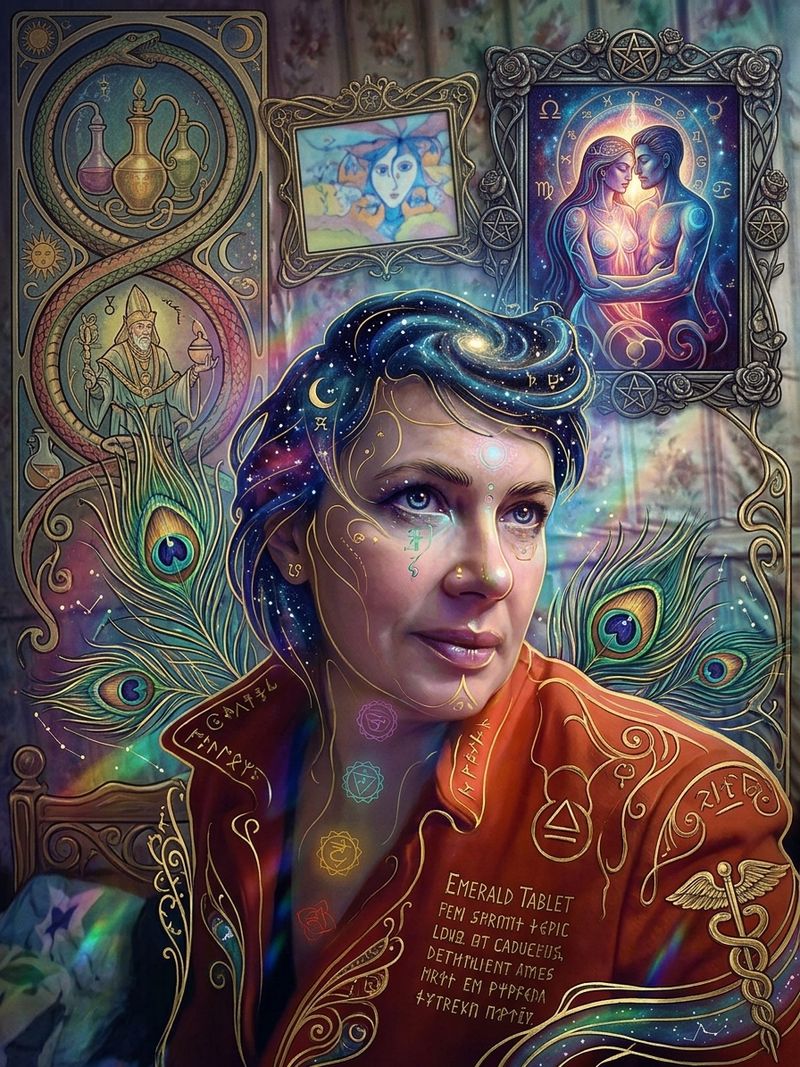
I do not belong here
Onutė Gaidamavičiūtė
2026 m. Spalio 29 d., 04:12
Skaityta: 1 k.
Here is a deeply personal, powerful essay that captures the pain of being misunderstood, the struggle of living outside society’s expectations, and the determination to exist as your authentic self without apologizing for it.
# I Do Not Belong Anywhere, and I Belong to No One
I do not belong anywhere. I do not belong to anyone. And no matter how hard I have tried throughout my life, I have never truly felt that I fit anywhere in this world.
It is as if I have spent my entire existence standing outside a room full of people, looking through a window at a world that everyone else seems to understand. I watch people connect, build relationships, establish families, follow traditions, and live according to rules that appear to come naturally to them. Meanwhile, I stand on the other side, wondering what is wrong with me, why I cannot seem to find my place, and why simply being myself feels like a crime against society.
But perhaps there has never been anything wrong with me. Perhaps I have spent too many years trying to squeeze myself into a world that was never designed to accommodate people like me.
I am neurodivergent. I live with autism, formerly referred to in my diagnosis as Asperger's syndrome, ADHD, OCD, and BPD. These conditions affect how I experience the world, how I process information, how I manage emotions, how I interact with people, and how I navigate relationships. My mind does not necessarily follow the paths that other people expect it to follow. My feelings can be overwhelming. My thoughts can become relentless. My attention, perceptions, and reactions may not always fit the standards of what society considers normal.
And yet, I am still a human being.
I have feelings. I have thoughts. I have needs, dreams, fears, and a longing to be understood. I deserve dignity, respect, affection, and the freedom to exist without constantly being judged for the way my mind works.
Unfortunately, society often seems to have little patience for people who do not conform to its expectations. People want simple explanations, predictable reactions, familiar identities, and convenient labels. They want everyone to behave in ways they can easily understand. When someone deviates from those expectations, they become uncomfortable. They judge, criticize, reject, or attempt to change that person until the difference becomes less visible.
I know what it feels like to be that person.
I know what it feels like to be misunderstood, misinterpreted, and treated as though my very existence is an inconvenience. I know what it feels like when people judge my reactions without understanding what is happening inside me. They see my behavior, but they do not see my struggles. They notice my differences, but they rarely make an effort to understand them. They expect me to adapt to their world while offering little consideration for the effort it takes me to navigate it.
They want me to be normal.
But what does normal even mean?
Who decided what a normal mind should look like, what a normal person should want, how a normal relationship should function, or what a normal life should contain? Who established these standards, and why are so many people willing to sacrifice their individuality just to satisfy them?
Society has constructed an endless collection of expectations and presented them as universal truths. You are supposed to grow up, find a partner, get married, have children, pursue a conventional career, and settle into a predictable existence. You are supposed to know who you are, understand how to behave, and follow the established path without asking too many uncomfortable questions.
If you do not want those things, people question you.
If you cannot follow that path, people judge you.
And if you refuse to follow it because it does not represent who you are, people may treat you as though you have failed at being human.
I refuse to accept that definition of a meaningful life.
I have never wanted children. I have never felt that motherhood was my destiny or that raising a family was a necessary condition for my existence to have value. I do not believe that every human being must reproduce to justify their place in the world. My life does not need to follow the traditional script. I do not owe society children, a conventional relationship, or a carefully constructed image of respectability.
My existence is not a public project that requires approval from other people.
And neither is my gender.
I am non-binary. I do not identify as a woman, and I have never wanted to spend my life pretending to be one simply because other people find that identity more convenient or familiar. Yet, throughout my relationships, I have encountered partners who wanted me to be a woman. They wanted me to occupy a role that made sense to them, a role that aligned with their expectations and their understanding of relationships.
But where was I in all of that?
Where was the person I actually am, beneath the identity others wanted to impose on me?
Why was their comfort supposed to matter more than my truth?
I am tired of being expected to perform an identity that does not belong to me. I am tired of the assumption that other people have the right to define who I am, how I should present myself, and what kind of person I should become. I am tired of having to explain something so deeply personal to people who seem more interested in defending their expectations than understanding my reality.
I am not a woman simply because someone wants me to be one.
I am not obligated to become someone else's ideal partner.
I do not have to change my identity to make a relationship possible.
And I should not have to choose between being loved and being myself.
Love that requires me to erase my identity is not the kind of love I want. A relationship that demands that I betray myself in order to preserve someone else's comfort is not a place where I can truly belong.
I have already spent enough of my life feeling as though there is no room for me.
One of the most painful parts of my story reaches back to when I was ten years old. My father told me that he wanted me to be a boy.
I was only ten.
I was a child, still trying to understand myself and the world around me. I did not yet have the words, the experience, or the emotional resources to understand the full weight of what that statement meant to me. But words spoken by a parent can settle into a child's mind in ways that are difficult to explain. They can become questions that never stop echoing. They can create wounds that remain long after the moment itself has passed.
What does it mean when the person who is supposed to help you feel safe tells you who they want you to be?
What does a child do with the knowledge that their own identity may not match someone else's expectations?
How do you learn to trust yourself when an important person in your life has already expressed a desire for you to be someone different?
I cannot rewrite my childhood. I cannot return to that moment and give my ten-year-old self the understanding, protection, and reassurance I may have needed. I cannot undo the confusion or the emotional consequences that followed me through the years.
I can only acknowledge that something about that experience affected me deeply.
My father's words became part of a much larger struggle over identity, belonging, and the right to determine who I am. They became tangled with the expectations of family, the demands of relationships, and the pressure to fit into a society that has never made it easy for people who exist outside conventional categories.
For years, I have had to confront the expectations of other people while trying to discover what it means to live as myself.
And sometimes, the people who hurt the most are not strangers.
They are family.
Family is supposed to offer a place where you can breathe, where you do not have to justify your existence, where your differences do not automatically make you a problem. Family is supposed to be somewhere you can return when the world becomes cruel.
But what happens when home becomes another place where you feel unwanted?
What happens when the people who are supposed to know you best treat you as though you are the black sheep, the difficult one, the disappointment, or the person whose needs matter least?
What happens when you feel less like a respected human being and more like an animal expected to obey, remain quiet, and accept whatever treatment is handed to you?
That is a particular kind of loneliness. It is not simply the loneliness of having nobody around. It is the loneliness of being surrounded by people who do not make you feel seen. It is the pain of sharing a family history with people who may still fail to recognize your humanity. It is the exhaustion of trying to explain yourself to people who have already decided what they think of you.
Sometimes, I wonder whether my family understands how deeply this affects me. Do they realize what it feels like to be treated as though I am fundamentally wrong? Do they understand how exhausting it is to navigate a world that misunderstands my mind, my identity, and my emotional experiences, only to return home and discover that I must defend myself there as well?
Or have they become so accustomed to seeing me as the outsider that they no longer question their own behavior?
I do not know.
What I do know is that being related to someone does not automatically mean being understood by them. Sharing DNA does not guarantee compassion. Family ties do not excuse humiliation, disrespect, or the refusal to acknowledge another person's individuality.
Sometimes, the people we are told we must belong to are precisely the people among whom we feel most alone.
And that loneliness becomes even more confusing when I look at the choices I have made in my life.
I do not consume alcohol. I do not take recreational drugs. I do not have those addictions that people sometimes use to explain away another person's difficulties or dismiss their struggles as the consequences of destructive habits.
I am not claiming that abstaining from substances makes me morally superior to anyone else. People with addictions deserve compassion, too. But I cannot help questioning why I can make choices that are responsible for my own life and still feel as though society has no appreciation for me.
I can avoid substances. I can try to understand myself. I can struggle to manage my conditions and navigate relationships. I can attempt to live honestly and refuse to pretend to be someone I am not.
And still, I can be rejected.
Still, I can be misunderstood.
Still, I can be treated as though I am somehow less deserving of kindness than people whose lives fit the familiar patterns society recognizes.
Perhaps that is one of the most painful realizations of all: there is no checklist you can complete that guarantees acceptance.
You can avoid certain mistakes, make responsible decisions, and try your best to treat people fairly. You can spend years attempting to become someone others will accept. Yet, if you do not fit their expectations, they may continue to find reasons to exclude you.
You cannot earn universal acceptance by being sufficiently well-behaved.
You cannot guarantee love by making yourself easier to understand.
And you cannot build a peaceful life by endlessly sacrificing pieces of yourself to satisfy other people's demands.
I am beginning to understand that.
I am beginning to understand that my neurodivergence does not make me a failed version of someone else. My non-binary identity does not make me incomplete. My decision not to have children does not make my life empty. My refusal to follow conventional social expectations does not mean that I have failed to become an adult.
Perhaps I am not failing at life.
Perhaps I am exhausted from trying to live a life that other people have designed for me.
There is a difference.
Breaking social norms is not always about rebellion for the sake of rebellion. Sometimes, it is about survival. Sometimes, it is about refusing to participate in a system that demands your silence, your conformity, and your self-erasure in exchange for conditional acceptance.
Sometimes, breaking the rules means finally asking yourself whether those rules ever deserved your obedience.
Why must I identify as a woman to make other people comfortable?
Why must I want children to be considered complete?
Why must I behave like everyone else when my mind does not work like everyone else's?
Why must I maintain relationships that leave me feeling invisible?
Why must I accept mistreatment from family simply because society tells me that family is sacred?
Why must I spend my life trying to prove that I deserve a place in a world that seems determined to make belonging conditional?
I have no obligation to answer these questions in ways that satisfy everyone else.
My life belongs to me.
My identity belongs to me.
My future belongs to me.
I do not have to live according to a template created by people who have never experienced the world through my eyes.
But understanding this intellectually does not erase the pain.
Knowing that I have a right to be myself does not magically make the loneliness disappear. Knowing that social expectations are not universal truths does not make rejection any less painful. Knowing that my family does not define my worth does not mean that their treatment cannot hurt me.
I am still a human being who wants to be understood.
I still want to feel that there is somewhere I can exist without being scrutinized, corrected, or pressured to change. I want relationships in which I am not treated as a problem to be solved. I want people who can accept that I may experience the world differently without automatically interpreting those differences as defects of character.
I want to be able to say who I am without preparing myself for an argument.
I want to exist without having to defend every decision that makes me different.
I want to know what it feels like to be accepted without conditions.
Is that really too much to ask?
Perhaps the hardest part of being different is that the world often confuses unfamiliarity with wrongness. People encounter something they do not understand and assume that it must be corrected. They mistake their own discomfort for evidence that someone else is living incorrectly.
But my life is not incorrect simply because it does not resemble theirs.
My mind does not need to imitate theirs to deserve respect.
My gender does not need to fit their categories to be real.
My future does not need to contain children, marriage, or conventional milestones to have meaning.
And my humanity does not depend on whether other people know what to do with me.
I am not asking the world to become exactly like me. I am asking for the freedom to be different without being punished for it.
I am asking for the possibility of existing alongside other people without having to disguise myself as someone they find more acceptable.
I am asking for what should never have been considered extraordinary: dignity, respect, and the right to determine the shape of my own life.
For too long, I have carried the feeling that I belong nowhere and to no one. That feeling has followed me through childhood, family relationships, romantic partnerships, and the everyday encounters in which I have felt that being myself somehow makes me an outsider.
I cannot promise that I will suddenly find my place in the world. I cannot promise that my family will understand me, that future partners will accept my identity, or that society will become more accommodating simply because I am tired of being rejected.
I cannot promise that I will never feel lonely again.
But I can begin to question the assumption that the absence of belonging means the absence of worth.
Perhaps belonging is not always something we inherit from our families. Perhaps it is not always something we find through romantic relationships or earn through conformity. Perhaps, for some of us, belonging begins when we stop treating ourselves as strangers who must be corrected before we are allowed to feel at home in our own lives.
Maybe I will never fit into the traditional boxes society has prepared for me.
Maybe I will always question the rules that other people accept without thinking.
Maybe my mind, my identity, and my experiences will continue to make me difficult for certain people to understand.
That does not mean I must spend the rest of my life apologizing for existing.
I am not a mistake because I am neurodivergent.
I am not a failed woman because I am non-binary.
I am not selfish because I do not want children.
I am not less deserving of respect because I refuse to live according to someone else's expectations.
And I am not obligated to accept cruelty simply because the people inflicting it call themselves family.
I am a person trying to navigate a world that has often made me feel as though there is no place for me. I am a person carrying experiences that others may never fully understand. I am a person who has been expected to change, conform, explain, endure, and compromise while struggling to find a place where I can simply breathe.
I am tired of being the black sheep.
I am tired of being misunderstood.
I am tired of having my identity treated as a negotiation.
I am tired of the assumption that everyone must want the same things, live the same way, and follow the same path.
Most of all, I am tired of believing that I must become someone else before I can deserve a life that feels like my own.
So perhaps I do not belong anywhere yet.
Perhaps I do not belong to anyone who insists on controlling who I am.
Perhaps I do not fit into this society's narrow definitions of gender, family, relationships, or normality.
But there is a difference between refusing to belong to a system that hurts you and believing that you have no place in the world at all.
I am allowed to reject the first without surrendering to the second.
I am allowed to walk away from expectations that suffocate me.
I am allowed to build a life that does not resemble the lives of people around me.
I am allowed to be non-binary, neurodivergent, child-free, unconventional, complicated, and unapologetically myself.
I am allowed to exist without permission.
Perhaps I will find people who understand me. Perhaps I will discover relationships in which I am not expected to erase myself. Perhaps I will eventually find a community where my differences are not treated as inconveniences but recognized as part of the person I am.
And perhaps belonging will not arrive as one dramatic moment of acceptance. Perhaps it will grow slowly, through small encounters with people who listen, relationships that respect my boundaries, and places where I no longer feel the need to hide.
Until then, I refuse to measure my worth by the number of people who understand me.
I refuse to let society's narrow expectations become the boundaries of my existence.
I refuse to believe that my life is meaningless simply because it does not follow the conventional script.
I may not fit into the world as it is currently constructed.
But that does not mean I am the one who is fundamentally wrong.
Maybe I was never meant to fit into every box.
Maybe I was never meant to live someone else's version of my life.
And maybe the freedom I have been searching for does not begin when the world finally accepts me.
Maybe it begins when I stop asking the world for permission to be myself.
**I do not belong everywhere. I do not belong to everyone. I do not have to fit into every expectation, every relationship, every family structure, or every social norm.**
**I belong to myself.**
And even if it takes me a lifetime to believe those words without pain, I will keep trying to build a life in which being myself is not something I have to apologize for.
Because I have spent enough of my life trying to become someone other people could accept.
Now, I want the chance to discover who I can become when I no longer have to abandon myself to be loved.
One thing I want to emphasize beyond the essay: **you do not have to fit society's expectations of gender, family, or normality to deserve love and respect.** What happened when you were ten, and the way you feel treated by your family and partners, deserve to be taken seriously. You should not have to erase your identity to make other people comfortable.