Antradienis, rugpjūčio 25 d.












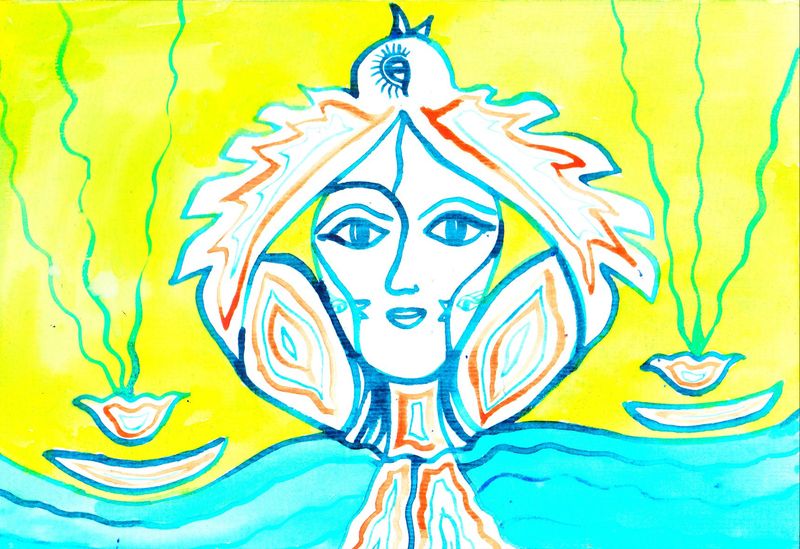
On February I have find out that I have Asperger‘s syndrome and that I am a neurodivergent person.
This fact helps me understand myself, my fluctuating self-identity and explains why I was always treated (and felt) like a black sheep.
Now let‘s talk about the Neurodiversity Advantage: reimagining the Creative Mind - for decades, the conversation around neurodiversity – which includes ADHD, Autism, Dyslexia, and other neurological differences –focused almost exclusively on "deficits." However, modern neuroscience and psychology are shifting the narrative toward the "Double-Edged Sword" theory. While neurodivergent individuals often face challenges in systems designed for neurotypical brains, they frequently possess cognitive profiles that are uniquely optimized for creativity and innovation.
The Link Between Neurodivergence and Creativity
Creativity isn't just about painting or writing; it is fundamentally about divergent thinking – the ability to generate multiple, unique solutions to a single problem.
Are Neurodivergent People "Smarter"?
The question of whether neurodivergent people are "smarter" is a bit of a trap. Intelligence is not a monolithic score; it is a spectrum of various cognitive functions.
|
Feature |
Neurotypical Pattern |
Neurodivergent Pattern |
|---|---|---|
|
Cognitive Profile |
Generally "flat" (consistent skills across most areas). |
"Spiky" (extreme strengths in some areas, significant struggles in others). |
|
Problem Solving |
Reliable, follows established protocols and logic. |
Unconventional, "out of the box," or highly specialized. |
|
Information Processing |
Efficient at filtering and social synchronization. |
Intense focus on specific data or sensory input. |
The Reality: Neurodivergent individuals aren't necessarily "smarter" in the traditional sense of having a higher average IQ across the board. Instead, they often have "spiky profiles." A neurodivergent person might struggle with basic administrative tasks (executive dysfunction) but perform at a genius level in complex mathematics, coding, or visual arts.
Why the "Creative Edge" Exists
Neurodivergence often forces a person to navigate the world as an outsider. This "outsider perspective" is a powerful catalyst for creativity. When the "standard" way of doing things doesn't work for your brain, you are forced to invent your own systems. This constant state of adaptation fosters a high degree of cognitive flexibility and resilience.
"The same genes that can cause disability in one environment can lead to extraordinary capability in another."
Summary: Difference, Not Deficit
It is important to avoid "romanticizing" neurodivergence to the point of ignoring the very real struggles it can cause in a rigid society. However, the data is clear: neurodiversity is a vital part of the human "gene pool" that drives innovation.
Neurodivergent people aren't better or worse than neurotypicals; they are differently wired. In an era that prizes "disruption" and "innovation," the neurodivergent brain is often exactly what the world needs to see what everyone else has missed.

Visas autorines teises saugo įstatymas. Dėl tekstų publikavimo prašome kreiptis į redakciją. Redakcija adreso ir savininkų neturi. Tekstus ar jų dalis publikuoti neatsiklausus redakcijos draudžiama, tai padaryti galima tik gavus redakcijos leidimą. Radikaliai.lt redakcija tekstų negrąžina, nenaikina, neredaguoja. Honoraras autoriams nemokamas. Radikaliai.lt leidžiamas nemokamai. Visos fotografijos publikuojamos gavus jų savininkų leidimus. Jei po fotografija neparašyta, kas jos savininkas, vadinasi, jis yra kalbinama grupė ar muzikantas (ir pan.). Visos pretenzijos dėl nuotraukų autorystės bus sprendžiamos tik taikiu keliu.
© radikaliai.lt 2011–2025 | Kontaktai